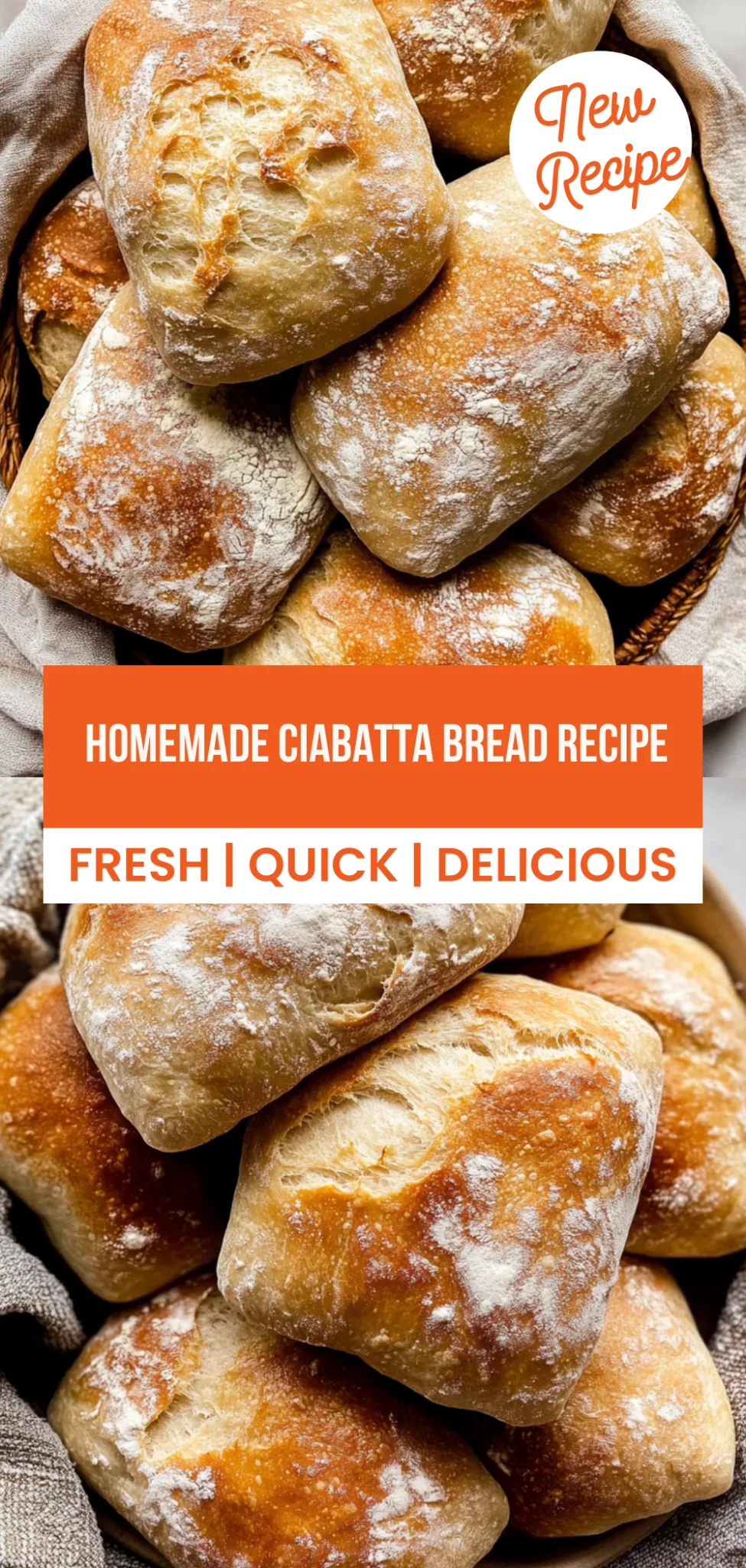
Homemade Ciabatta Bread Recipe: Irresistibly Fresh Delight
There’s nothing quite like tearing into a warm loaf of homemade ciabatta bread, where the crisp crust gives way to a soft, airy interior that practically begs to be slathered with your favorite spreads. Imagine the aroma wafting through your kitchen as you savor each bite—crispy, savory, fresh, and loaded with protein. I created this Homemade Ciabatta Bread Recipe during one particularly busy week when my family craved something hearty yet simple to pair with our meals, and it quickly became a staple at our dinner table. With about 250 calories per serving, it’s the perfect foundation for sandwiches or a delightful side that keeps everyone coming back for more.
The first time I made this ciabatta was on a rainy Sunday afternoon, the kind of day that calls for comfort food. My teenage son walked in just as I pulled the loaves from the oven, and his eyes lit up. “Wow, Mom! That looks amazing!” he exclaimed, and I could see the anticipation on his face as he reached for a slice. What sets my recipe apart is the long fermentation process that enhances the flavor while creating those beautiful air pockets inside—this isn’t just any bread! When I served it alongside our homemade tomato soup, I couldn’t help but grin when he asked for seconds, declaring it “the best bread ever.”
Ingredients for the Homemade Ciabatta Bread
Each ingredient in this dish plays an essential role in flavor and texture. Here’s what you’ll need:
Dough Ingredients
500 g bread flour: This high-protein flour creates a strong gluten structure for a chewy texture.
400 ml water: Hydrates the dough, ensuring a soft and airy crumb.
10 g salt: Enhances flavor while controlling yeast activity for optimal fermentation.
5 g instant yeast: Acts as the leavening agent, helping the bread rise beautifully.
Dusting Ingredients
- 50 g semolina flour: Provides a gritty surface that prevents sticking and adds an appealing crunch.
Step-by-Step Instructions
To get started on your homemade ciabatta bread, you’ll want to begin with the dough preparation since it requires a long rest time for the best flavor and texture.
Step 1: In a large mixing bowl, combine the bread flour, instant yeast, and salt. Make sure to mix these dry ingredients thoroughly so that the yeast is evenly distributed throughout the flour. Once mixed, gradually add the room temperature water while stirring with a wooden spoon or your hands until a sticky dough forms. This initial mixture might seem wet at first, but don’t worry—this high hydration is key for that airy ciabatta crumb we’re aiming for!
Step 2: After you’ve mixed in all the water, cover the bowl with a kitchen towel and let it rest at room temperature for 12-18 hours. This long fermentation allows the flavors to develop and creates those beautiful air bubbles in your bread. I usually prepare this step in the evening so I can bake fresh bread in the morning—the smell alone is worth it!
Step 3: Once your dough has risen and doubled in size, flour your work surface generously to prevent sticking. Gently turn the dough out onto this surface without deflating it too much; you want to keep as many of those lovely air pockets as possible. Using floured hands, be careful not to knead or overwork the dough as you shape it.
Step 4: Divide the dough into two equal pieces using a bench scraper or a sharp knife. Shape each piece into a rectangular loaf by stretching it gently rather than pressing down too hard; this technique helps maintain its airy structure. Once shaped, dust each loaf lightly with semolina flour for added texture and place them on a baking sheet lined with parchment paper—this will also help prevent sticking during baking.
Step 5: Cover the loaves again with a kitchen towel and let them rise for another 1-2 hours until they puff up noticeably but are not over-proofed. Keep an eye on them; they should be soft to touch and slightly spring back when poked gently. Patience here pays off big time—it’s crucial for achieving that perfect crusty exterior!
Step 6: Preheat your oven to 220°C (428°F). It’s important to have your oven fully heated before placing the loaves inside because that initial burst of heat is what gives ciabatta its signature rise and crusty finish.
Step 7: Once preheated, carefully place your baking sheet with the loaves into the oven and bake for 25-30 minutes until they are golden brown and sound hollow when tapped on the bottom—this is a great visual cue for doneness! I like to rotate my baking sheet halfway through baking to ensure even cooking all around.
Step 8: When done, remove the loaves from the oven and let them cool completely on a wire rack before slicing. This cooling period allows moisture to escape, which helps keep your crust nice and crisp. Trust me; slicing into warm bread can lead to a gummy interior!
What to Serve with Homemade Ciabatta Bread
This dish is already incredibly filling and balanced, but these sides add extra variety and nutrition to round out your meal perfectly.
Caprese Salad: Fresh mozzarella, ripe tomatoes, and fragrant basil drizzled with balsamic reduction create a refreshing complement to the rustic ciabatta. The creamy cheese adds healthy fats while the tomatoes provide vitamins A and C, enhancing the overall nutritional profile of your meal. My family loves this salad as a vibrant side, especially during summer gatherings.
Garlic Herb Roasted Potatoes: Crispy roasted potatoes seasoned with garlic, rosemary, and thyme offer a hearty side that contrasts nicely with the soft texture of the ciabatta. Not only do they pack additional carbohydrates for energy, but they also provide potassium and fiber, rounding out your macros effectively. This is a staple in our home for holiday dinners, where everyone enjoys dunking their bread into the flavorful potato juices.
Avocado Hummus: Creamy avocado blended with chickpeas, tahini, lemon juice, and garlic creates a rich dip that pairs beautifully with ciabatta slices. This dish introduces healthy monounsaturated fats along with about 8 grams of protein per serving from the chickpeas. It’s an easy meal prep option we often make at the beginning of the week for quick snacks or spreads during busy days.
Bruschetta Topping: Diced tomatoes marinated in olive oil, garlic, and fresh basil served on toasted ciabatta slices echo the rustic Italian flavors while adding a burst of freshness. This topping not only enhances your bread experience but also provides antioxidants from the tomatoes and healthy fats from the olive oil. We love making this as an appetizer when hosting friends; it’s always a crowd-pleaser!
Storage & Serving Tips
To store your Homemade Ciabatta Bread, let it cool completely before placing it in an airtight container or a resealable plastic bag. This will keep the bread fresh for up to 3 days at room temperature. If you want to store it for a longer duration, consider freezing the bread; wrap individual pieces tightly in plastic wrap and then place them in a freezer-safe bag, where they can last for up to 3 months. To maintain the crisp crust, avoid storing any toppings or spreads with the bread. For best results, keep any additional ingredients like olive oil or vinegar in separate small containers.
When reheating your ciabatta, preheat your oven to 350°F (175°C) and place the bread directly on the rack for about 5-7 minutes to revive its crispy crust. Avoid microwaving the bread as it tends to make it soft and disappointing, losing that delightful texture that makes ciabatta so special. If you’ve made any sandwiches with fillings like meats or cheeses, it’s best to remove those components before reheating the bread; you can simply microwave them separately for about 30 seconds to 1 minute until heated through.
Pro tip: To maximize your meal prep with Homemade Ciabatta Bread, consider doubling the recipe on Sundays and portioning it into individual containers for easy grab-and-go meals throughout the week. Family members can create their own sandwiches by choosing from different fillings each day. For variety, swap out traditional deli meats with grilled chicken or roasted vegetables, and incorporate spicy mustard or pesto instead of standard condiments. To keep your ciabatta at its best during storage, always add fresh toppings like lettuce or tomatoes just before serving to prevent sogginess and maintain crunchiness.
Conclusion
This Homemade Ciabatta Bread Recipe has become a regular rotation for me, as I make it at least twice a month because it delivers that perfect balance of a crisp crust and an airy interior, all while being around 250 calories per serving. The high protein content in the bread flour truly sets this recipe apart, making each bite satisfying and nourishing. Give this one a try this week. I promise it’ll become a regular rotation in your house too.
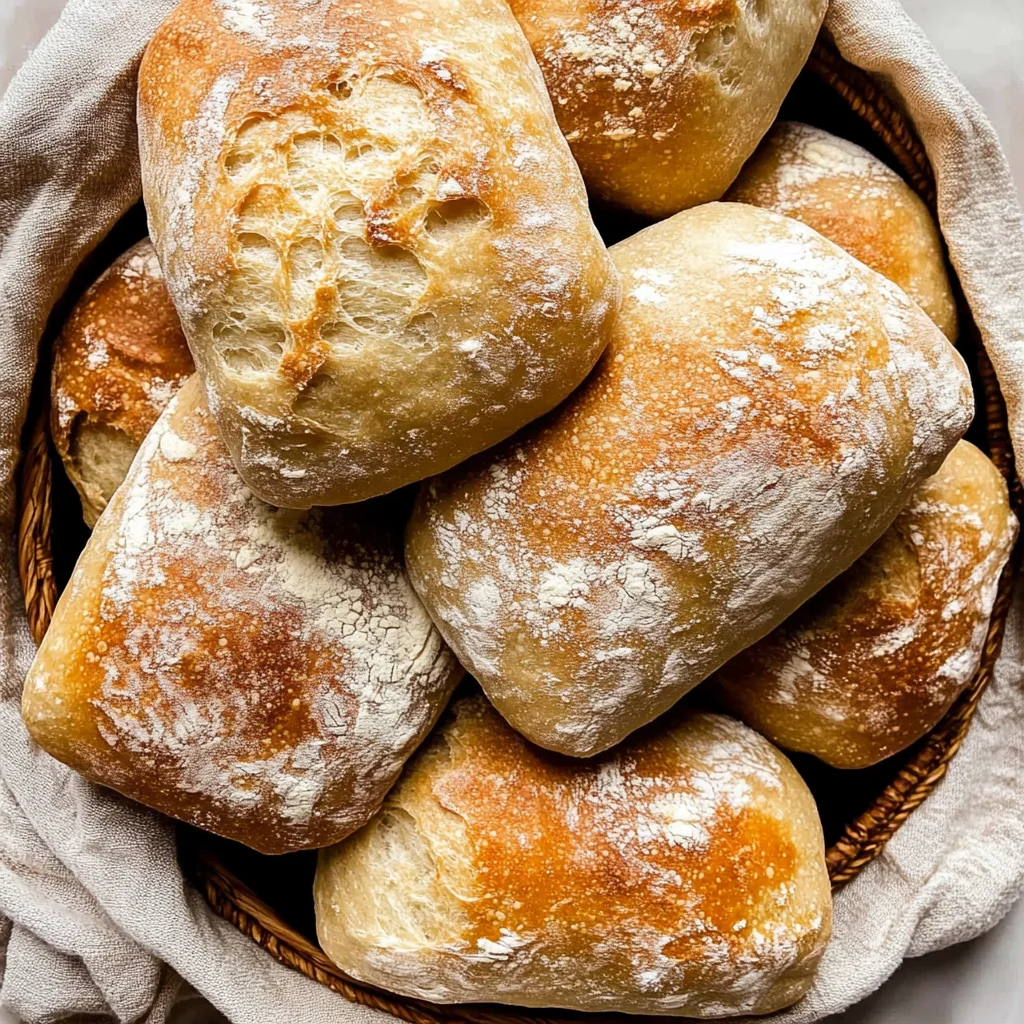
Homemade Ciabatta Bread
Ingredients
Method
- In a large mixing bowl, combine the bread flour, instant yeast, and salt.
- Gradually add the water while mixing until a sticky dough forms.
- Cover the bowl with a kitchen towel and let it rest for 12-18 hours at room temperature.
- After the dough has risen, flour your work surface and gently turn the dough out onto it.
- Divide the dough into two equal pieces and shape them into rectangular loaves.
- Dust the loaves with semolina flour and place them on a baking sheet lined with parchment paper.
- Cover the loaves with a kitchen towel and let them rise for another 1-2 hours.
- Preheat the oven to 220°C (428°F).
- Bake the loaves for 25-30 minutes until golden brown and crusty.
- Let the bread cool on a wire rack before slicing.